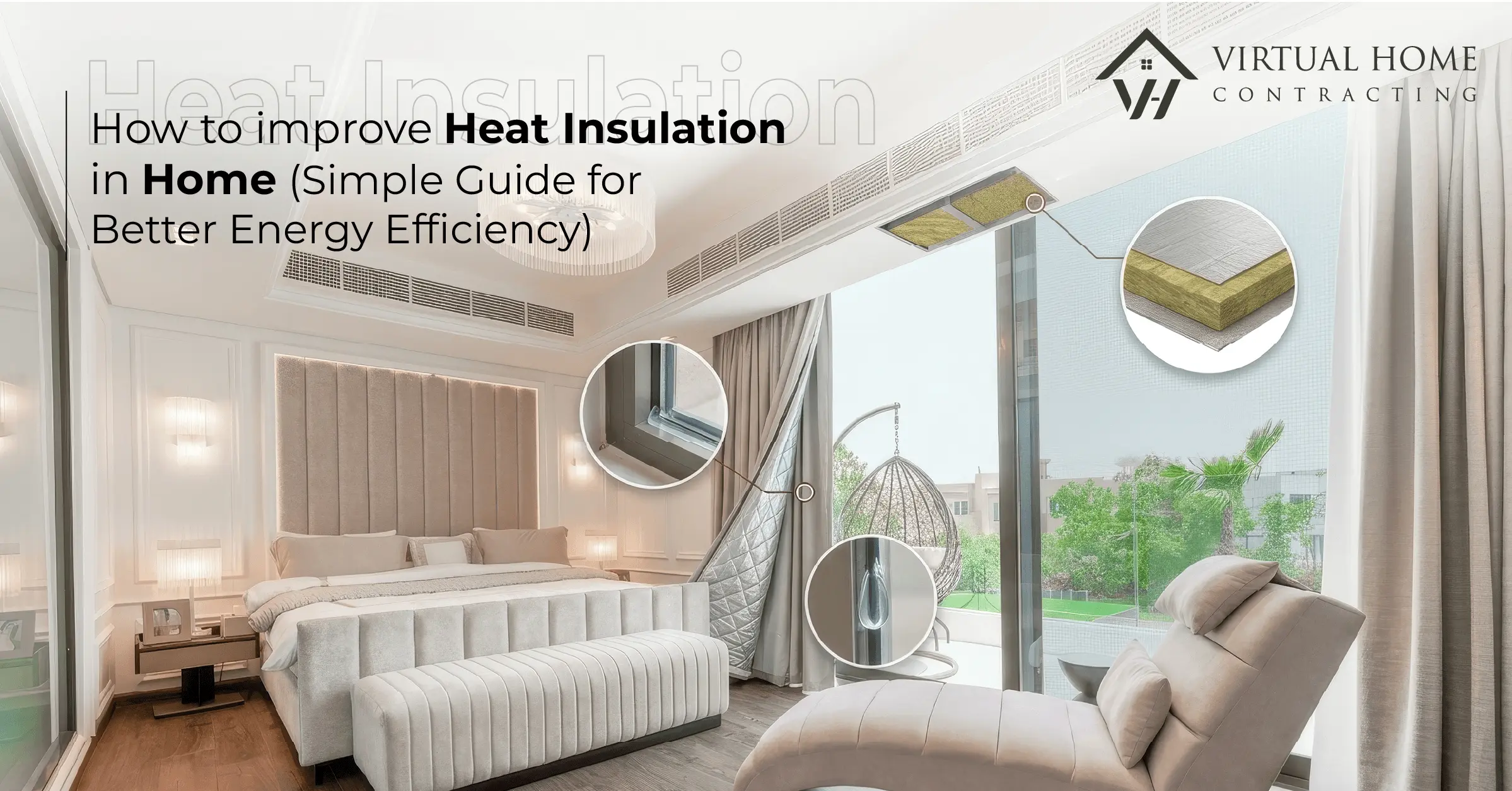
A comfortable home depends a lot on good insulation. If your house loses heat quickly in winter or becomes too hot in summer, poor insulation might be the reason. Learning how to improve heat insulation at home can help you maintain a comfortable temperature reduce energy bills and make your living space more efficient. A lot of homes today lose heat through walls, windows, roof and floors. When insulation is weak, heating systems must work harder to keep rooms warm. Fortunately, there are several ways to improve insulation and increase heating efficiency.
Why is heat insulation so important?
Good insulation helps keep warm air inside during winter and block excessive heat during summer. This makes your home comfortable and energy efficient.
Lower energy bills
When heat stays inside your home your heating system does not need to run as often.
Better indoor comfort
Rooms stay warmer in winter and cooler in summer.
Reduce energy wastage
Insulation prevents heat from escaping through walls and windows.
How to improve heat insulation in house?
If you want to improve insulation in your house start by identifying the areas where heat is escaping. These are usually the roof walls, windows and doors.
Seal gaps around doors and windows
Small gaps around doors and windows can allow warm air to escape. Even tiny openings can cause noticeable heat loss. To fix this problem, you can:
- Install weather stripping around doors
- Use caulk to seal cracks around windows
- Add door draft stoppers
- Install window seals
Install double or insulated windows
Windows are one of the biggest sources of heat loss in many homes. Upgrading to double glazed on insulated windows can make a big difference. Double glazed windows generally have two layers of glass that trap air between them. This helps you reduce heat transfer and improves insulation. If replacing windows is not possible, you can also:
- Use thermal curtains
- Install window insulation film
- Use thick blinds
Add roof or attic insulation
Heat naturally rises, which means a lot of warmth escapes through your roof. Not adding insulation in the attic or roof area is one of the best ways to improve heat retention. Proper roof insulation can greatly reduce heat loss and improve your overall energy efficiency.
Common insulation materials include:
- Fibreglass insulation
- Foam insulation
- Mineral wool
Insulate walls properly
Walls are another major source of heat loss in forms. Poorly insulated walls allow warm air to escape quickly from your house. Wall insulation is especially useful if you are living in an older home that was built without any modern insulation material. You can improve wall insulation by:
- Installing cavity wall insulation
- Adding foam insulation
- Using insulation panels
- Applying thermal plasterboard
Improve floor insulation
Cold floors can make your room feel much colder even when the heating system is running. The solutions help reduce heat loss through the floor and improve room comfort. Here are some ways to insulate floors:
- Use thick carpets or rugs
- Install insulated flooring materials
- Seal gaps between wooden floorboards
How to improve the heat insulation in a house or apartment?
Apartments often have limited renovation options but there are different ways to improve insulation. You can use heavy curtains as they help trap warm air inside the room. Furthermore, you can add door draft stoppers as these prevent cold air from entering through gaps under doors. Decorative insulation panels are also a great option to improve heat retention. These small changes can make a big difference in your indoor warmth.
How do you make heat insulation at home?
If you prefer DIY solutions to improve insulation, there are several easy methods you can try. Thick curtains help reduce heat loss from windows and improve room warmth. Adding carpets and rugs acts as natural insulation, keeping your floors warm. Also, check for cracks around your windows and doors and seal them using weather stripping or caulk. For homeowners planning bigger projects, integrating these improvements while working with General Contracting or Interior Design services can make installations more efficient and professional.
How to improve the heating efficiency of your home?
Improving insulation is one of the most effective ways to increase heating efficiency. Combining simple measures with proper insulation can significantly reduce energy usage. Some practical steps include:
- Maintaining your heating system regularly
- Using programmable thermostats
- Closing doors in unused rooms
- Insulating hot water pipes
- Keeping radiators and vents clear
Additionally, integrating home upgrades like Smart Home monitoring or consulting Architecture and MEP professionals can optimize your home’s overall energy efficiency and comfort.
Conclusion
Improving heat insulation in your home is one of the best ways to create a comfortable and energy-efficient living space. By sealing gaps, upgrading windows, and using simple solutions like curtains and rugs, you can reduce heat loss and maintain a stable indoor temperature. For a holistic home improvement, consider combining these insulation efforts with services like Pool & Landscape designs or Interior Design upgrades.
FAQs About Improve Heat Insulation in Home
How to improve heat insulation in your house?
You can improve insulation by sealing gaps around doors and windows and installing double glazed windows.
How can you increase the warmth in your house?
To make your home warmer improve insulation and use thermal curtains and ensure your heating system works effectively.
How to improve the heating efficiency of a home?
You can improve heating efficiency by adding insulation sealing drafts and using smart thermostats.